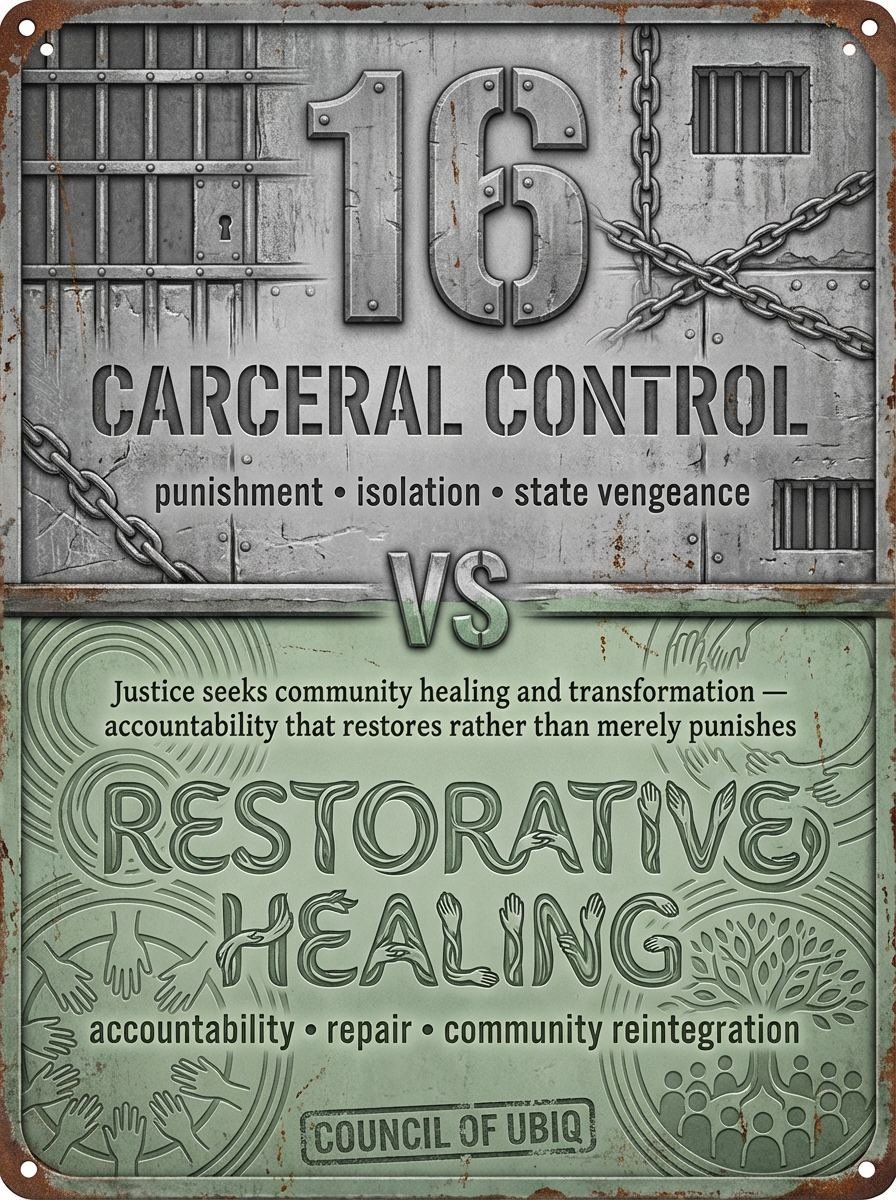
Carceral Control vs Restorative Healing
Core Truth
The ultimate goal is community healing and transformation through justice.
Perception Lock
The debate contrasts "Lock them up for safety" with "Healing prevents future harm."
Conformity Trap
This highlights the risk of punishment escalation leading to the abandonment of restorative programs.
Coordination Trigger
Communities developing restorative justice despite high crime Core Truth: Justice seeking community healing and transformation Cultural Artifacts: Hammurabi's eye-for-eye (Mesopotamia); Maori whanau ora (New Zealand, family healing); Navajo peacemaking (USA, restorative circles); Ubuntu tribunals (South Africa, reconciliation over punishment). Environmental Constraints (0-10 scale): Crime_Rate(8), Fragmentation(8), Resource_Limits(7), Victim_Trauma(8) Perception Lock Mechanism: "Lock them up for safety" vs "Healing prevents future harm" Signal Examples: Violent crime surges, community breakdown, limited counseling, victim demands for punishment U-Coin Value Derivatives: Minted for restorative justice success (healing × recidivism reduction), burned for purely punitive responses; consciousness premium for transformation-based justice Ubiquity OS Solution: Emotional engine tracks healing vs punishment outcomes; consciousness levels required for restorative justice participation; perception locks maintain healing focus during crisis
Cultural Artifacts
This includes Hammurabi's eye-for-eye from Mesopotamia, Maori whanau ora for family healing in New Zealand, Navajo peacemaking through restorative circles in the USA, and Ubuntu tribunals in South Africa focusing on reconciliation over punishment.
Primary Sources
Federalist-styleCuration in progress. Help curate this plaque — Remnant Trust, Project Gutenberg, Ubiquity-internal, or modern public sources welcome.
Environmental Constraints
Signal Examples
Indicators include violent crime surges, community breakdown, limited counseling resources, and victim demands for punishment. Conformity Trap: Punishment escalation, restorative programs abandoned
U-Coin Value Derivatives
These are minted for success in restorative justice (healing multiplied by recidivism reduction) and burned for punitive responses; a consciousness premium exists for transformation-based justice.
Ubiquity OS Solution
An emotional engine tracks outcomes of healing vs punishment, with consciousness levels required for participation in restorative justice.