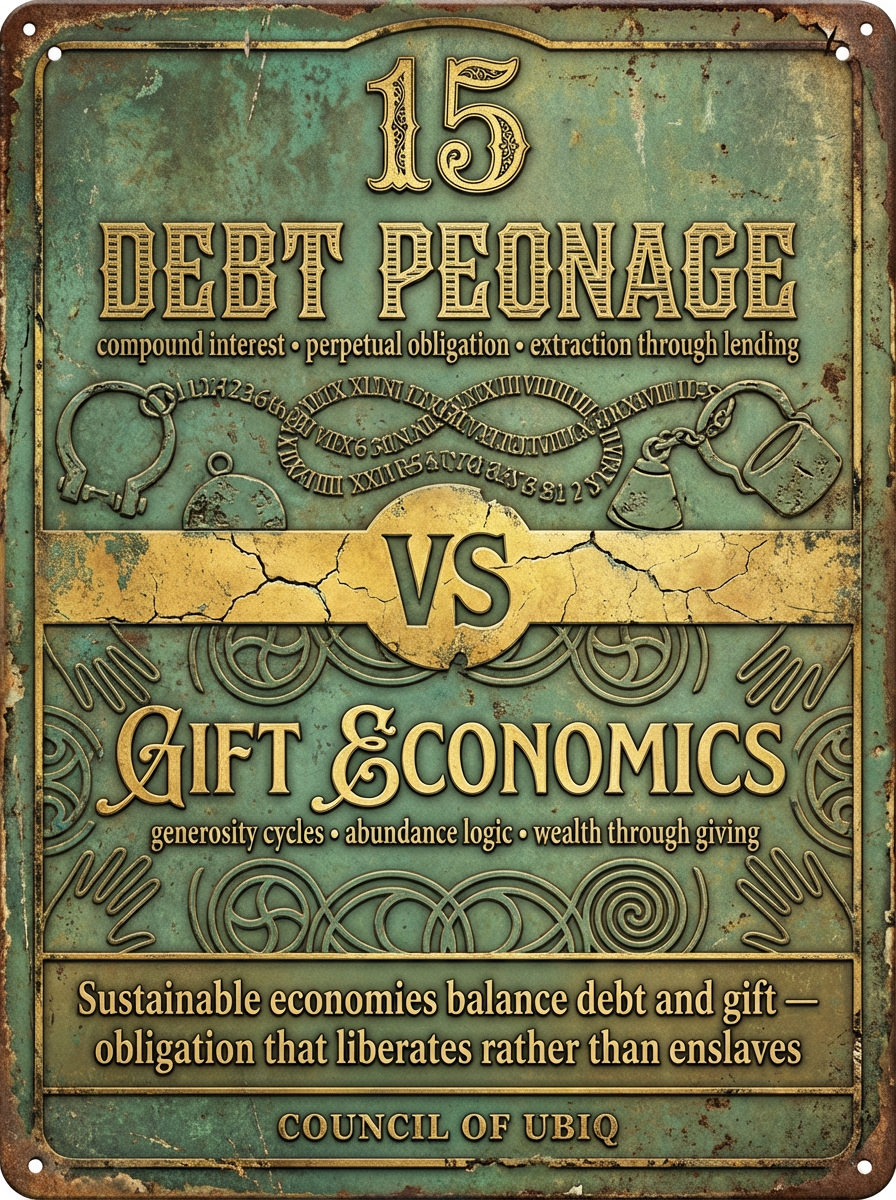
Debt Peonage vs Gift Economics
Core Truth
Emphasizes building exchange rather than entrapping the community.
Perception Lock
Contrasting views are "Debt drives necessary growth" vs "Gift relationships build lasting wealth."
Conformity Trap
Debt acceptance as inevitable, gift traditions abandoned
Coordination Trigger
Communities creating alternative exchange systems and mutual aid Core Truth: Exchange building rather than entrapping community Cultural Artifacts: Keynesian debt economics (Western); Jubilee traditions (Ancient Near East, debt forgiveness); Maori hau (New Zealand, gift spirit); Islamic zakat (obligatory giving building community).
Cultural Artifacts
Key influences include Keynesian debt economics (Western), Jubilee traditions (Ancient Near East, debt forgiveness), Maori hau (gift spirit in New Zealand), and Islamic zakat (obligatory giving that builds community).
Primary Sources
Federalist-styleCuration in progress. Help curate this plaque — Remnant Trust, Project Gutenberg, Ubiquity-internal, or modern public sources welcome.
Environmental Constraints
Signal Examples
Student debt, medical debt, national debt, compound interest systems U-Coin Value Derivatives: Minted for gift economy development (generosity × community wealth), burned for debt extraction systems; abundance where giving increases personal value through network effects
U-Coin Value Derivatives
Minted for gift economy development through generosity and community wealth, while burned for debt extraction systems.
Ubiquity OS Solution
U-coin abundance economics where gifting creates rather than depletes value; consciousness-native exchange systems; temporal flexibility allows gift relationship development despite financial pressure