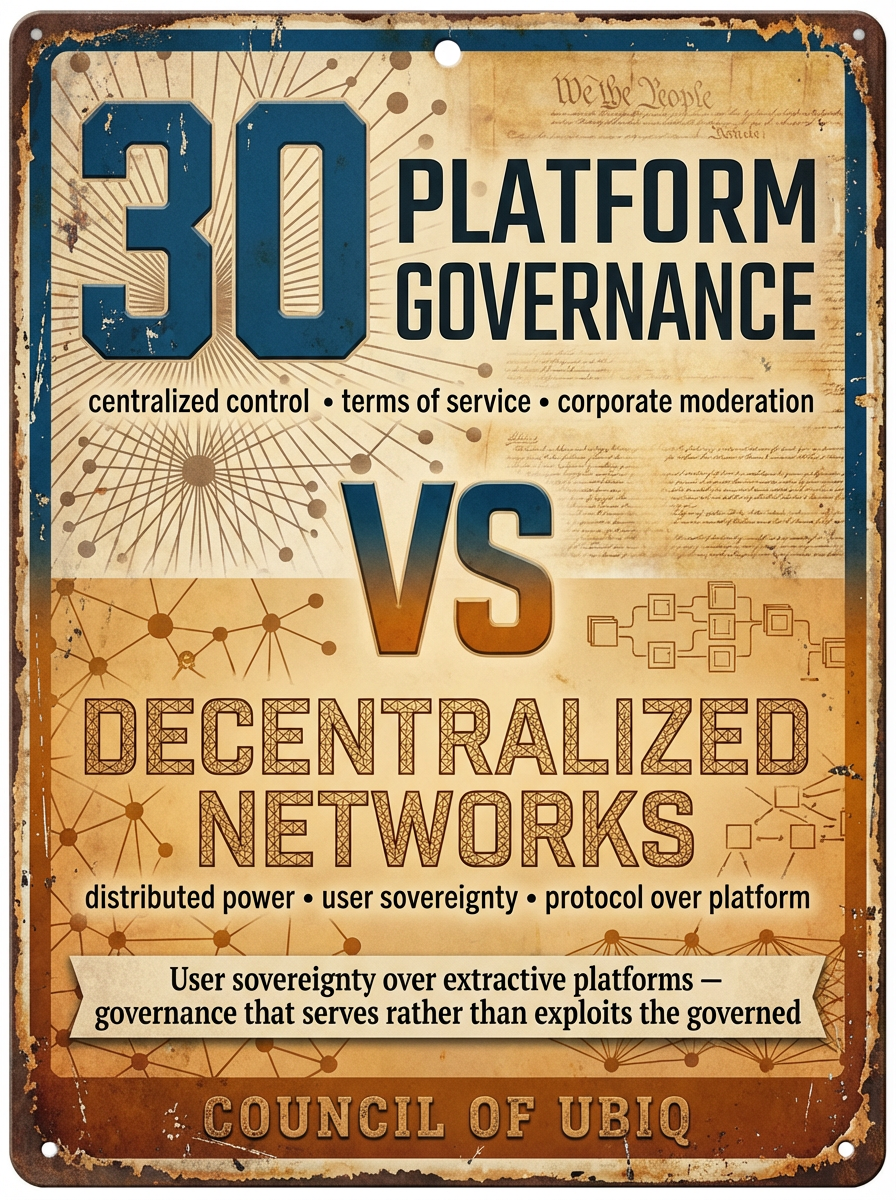
Platform Governance vs Decentralized Networks
Core Truth
Information architecture should prioritize human connection over corporate extraction. Environmental Constraints: Scored on a 0-10 scale, indicating high challenges in Network Effects (9), First Mover (8), Capital Requirements (9), and User Convenience (8).
Perception Lock
The dichotomy exists between platforms as providers of essential services versus decentralization as a means to freedom.
Conformity Trap
There is a prevalent acceptance of platform monopolies, with decentralization perceived as impossible.
Coordination Trigger
Community-owned platforms emerging and thriving Core Truth: Information architecture serving human connection over corporate extraction Cultural Artifacts: Zuckerberg's Facebook model (American centralization); Blockchain (global decentralization); Bazaar markets (Middle East, decentralized trade); Indigenous kinship networks (e.g., Aboriginal, connection over extraction).
Cultural Artifacts
Examples include Zuckerberg's Facebook representing American centralization, Blockchain exemplifying global decentralization, Bazaar markets in the Middle East showcasing decentralized trade, and Indigenous kinship networks demonstrating connection over extraction.
Primary Sources
Federalist-styleCuration in progress. Help curate this plaque — Remnant Trust, Project Gutenberg, Ubiquity-internal, or modern public sources welcome.
Environmental Constraints
Signal Examples
Reflecting issues of Big Tech dominance, platform lock-in, startup costs, and convenience addiction. Conformity Trap: Platform monopoly acceptance, decentralization seen as impossible
U-Coin Value Derivatives
Minted for user-serving platform development to empower users and increase platform value, while burned for extractive platform growth, highlighting the necessity of user sovereignty for platform success.
Ubiquity OS Solution
Utilizing swarm coordination fosters network effects without extraction, enhancing user agency through participation in consciousness-native platforms and promoting abundance economics.